
What Happened at Grand West?
On 8 January 2020, the plaintiff visited Grand West Casino and Entertainment World with his family.
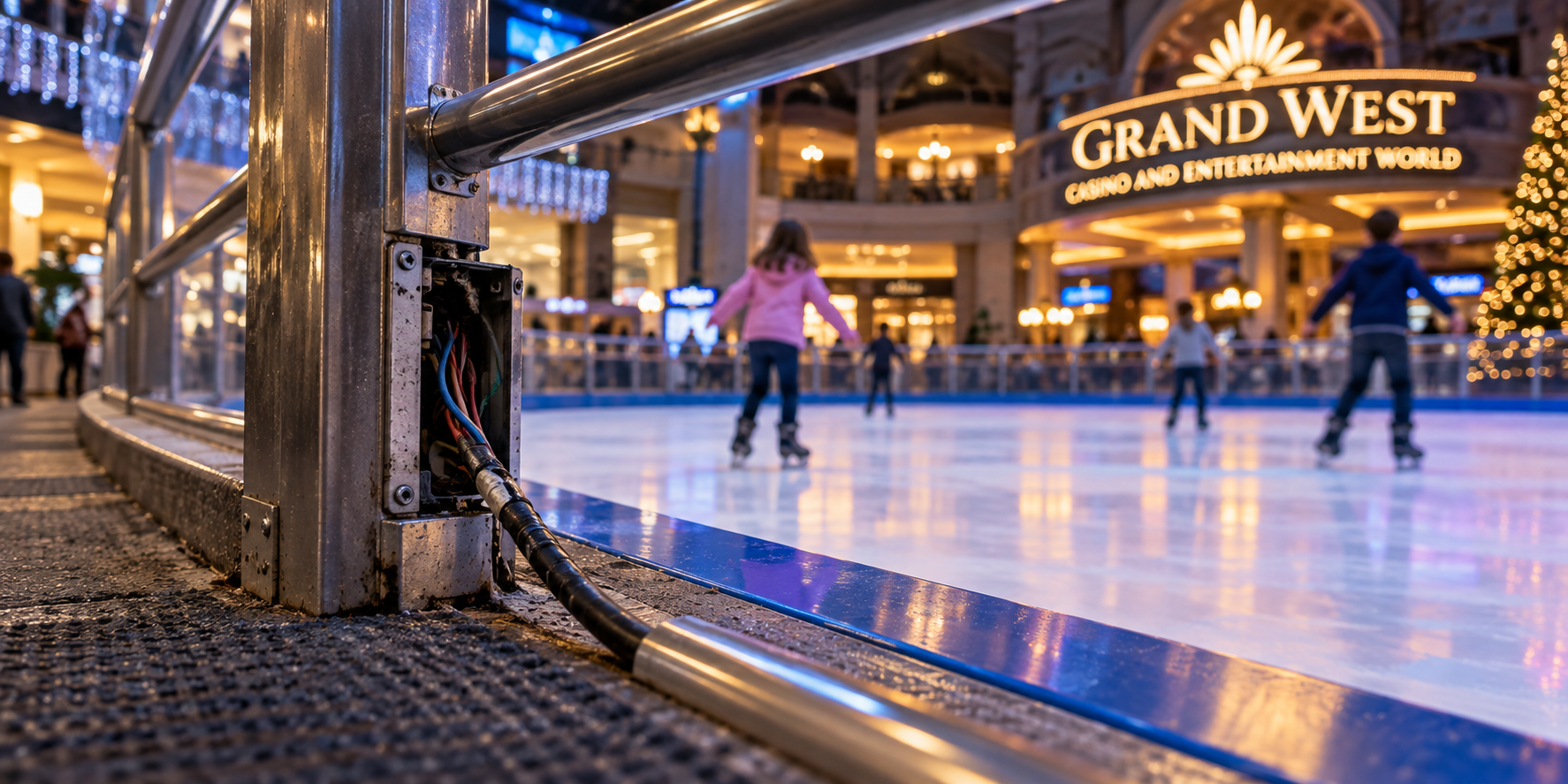
His four-year-old daughter was standing beside him at the kiddies' ice-skating rink, holding onto a steel or metal railing while watching other children.
The child suddenly cried out and began visibly trembling. Her father pulled her towards him and noticed a red mark on her hand.
When he inspected the area, he observed an exposed electrical wire lying on the floor. The child had been electrocuted.
Four-Year-Old Child
The minor child was visiting the public entertainment venue with her parents when the incident occurred.
Exposed Live Wire
A live electrical wire with exposed copper was lying near the children's ice-skating rink.
Electrocution & Burns
The child was electrocuted and sustained injuries that formed the basis of the personal injury action.
Sunwest International
Sunwest International (Pty) Ltd operated the Grand West Casino and Entertainment World premises.
What Happened Immediately After the Electrocution?
The child's father testified that after discovering what had happened, Grand West personnel became involved and paramedics subsequently attended to the child.
Burn gel was applied to her hand and underneath her feet. Her father thereafter took her to an emergency medical centre.
According to his evidence, there had been no warning indicating that electrical work was underway or that a live wire presented a danger near the ice rink.
The live wire was located in a busy entertainment area used by members of the public and children, close to an ice rink involving a water-based environment. The Court regarded the potential consequences of the hazard as extremely serious and readily foreseeable.
Where Did the Live Electrical Wire Come From?
Evidence at trial linked the electrical installation to a Christmas tree that had previously been positioned near the ice-skating rink.
The tree had been fitted with lights and was removed shortly before the incident.
Evidence from Grand West's own witnesses established that its electrical and maintenance department was responsible for the electricity supply used for the installation.
Once the Christmas tree was removed, the electrical and maintenance personnel were expected to ensure that the electricity was disconnected and that the area was properly secured and safe for the public.
The defendant's witnesses confirmed that it was the responsibility of Grand West's electrical and maintenance department to check that the electricity source was properly disconnected and the area made safe after the Christmas tree was removed.
Grand West Admitted Ordinary Negligence
An important feature of the case is that Grand West did not maintain that it had acted entirely without fault.
In its amended plea, the defendant admitted that it had acted negligently and wrongfully.
It also accepted that it owed a legal duty of care to members of the public, including the minor child.
The real dispute was therefore whether the conduct amounted merely to ordinary negligence or crossed the threshold into gross negligence.
What Is the Difference Between Negligence and Gross Negligence?
Negligence generally concerns a failure to act as a reasonable person would have acted in the circumstances.
Gross negligence represents something significantly more serious. The conduct must depart from the standard of the reasonable person to such an extent that it can properly be characterised as extreme.
Failure to Take Reasonable Care
A reasonable person would foresee the possibility of harm and take reasonable measures to prevent it, but the defendant fails to take those measures.
An Extreme Departure
The failure to take care is so serious that the conduct represents a marked and extreme departure from what could reasonably be expected.
The Court had to decide whether leaving the live electrical wire exposed in these particular circumstances was merely careless or represented such a radical failure to take reasonable care that it amounted to gross negligence.
Why Was the Risk So Serious?
Several features of the incident influenced the Court's assessment of the seriousness of the conduct.
The Wire Was Live
The electrical cable was energised and the live red wire had exposed copper, creating an obvious electrocution risk.
It Was Near a Children's Area
The exposed electrical hazard was located near a kiddies' ice-skating rink where children could reasonably be expected to be present.
There Was Significant Foot Traffic
The area formed part of a public entertainment environment with members of the public moving through the vicinity.
The Wire Was Near an Ice Rink
The presence of electricity near an area involving water increased the potential seriousness of the hazard.
The Risk Was Preventable
A proper inspection and disconnection of the electrical supply after removal of the Christmas installation could have identified and removed the danger.
Could Grand West Blame an Independent Contractor?
Grand West attempted during the proceedings to suggest that an independent contractor involved with the Christmas tree installation may have been responsible for the dangerous condition.
The Court was not persuaded by this argument.
The defendant had not pleaded that the external contractor should bear responsibility for the gross negligence alleged in the matter.
More importantly, Grand West's own witnesses confirmed that its electrical and maintenance department was responsible for connecting and disconnecting the electricity supply and ensuring that the area was safe after the Christmas tree was removed.
The Court rejected attempts to speculate that the electrical wire might have become exposed through some later intervening event. The employees who were responsible for the electrical and maintenance work were not called to provide a factual explanation for what had occurred.
The Missing Electrical and Maintenance Witnesses
The absence of evidence from the electrical and maintenance personnel became particularly significant.
Grand West's witnesses confirmed that these employees were responsible for ensuring that the electrical supply was safely disconnected and that the area was secured after the removal of the Christmas installation.
Yet the employees who could explain what steps had actually been taken were not called to testify.
In the absence of such an explanation, the Court was entitled to draw inferences from the proven facts before it.
A live exposed wire remained next to a children's ice-skating rink after the electrical department was responsible for making the area safe. The Court regarded these circumstances as strongly indicative of gross negligence.
Why Did the Court Find Gross Negligence?
The Court considered the nature of Grand West's business and the reasonable expectation that a public entertainment venue would ensure that areas used by children and other members of the public were safe.
The danger was significant. Electrocution can cause catastrophic injury or death, and the exposed live wire was situated in an area where substantial pedestrian traffic could reasonably be expected.
The Court concluded that the electrical and maintenance department had failed to fulfil its responsibility to secure the area.
The Court held that the conduct demonstrated an extreme failure to take reasonable care in the face of a foreseeable risk of grave injury. Grand West was accordingly found vicariously liable for the gross negligence of its employees.
Why Was Grand West Liable for Its Employees?
The relevant electrical and maintenance personnel were employees of Sunwest International and their responsibilities concerning the electrical installation formed part of their employment duties.
The Court therefore dealt with the defendant's liability through the principle of vicarious liability.
In the circumstances, Grand West was held responsible for the grossly negligent conduct and omissions of the employees responsible for securing the electrical installation and public area.
What About Grand West's Disclaimer Notices?
Grand West had disclaimer or indemnity notices displayed on its premises and had pleaded reliance on those notices in seeking to limit its liability for negligent conduct.
However, the defendant accepted during the proceedings that the notices could not exempt it from liability if its conduct was found to amount to gross negligence.
That concession made the Court's determination of the degree of negligence especially important.
In this case, Grand West expressly accepted that its disclaimer and indemnity notices could not be relied upon to limit liability for gross negligence. Once gross negligence was established, the disclaimers could not provide the defence it sought.
Does This Mean Every Disclaimer Notice Is Invalid?
No. The judgment should not be read as establishing that every disclaimer displayed by a business is automatically invalid or unenforceable.
The legal effect of a disclaimer depends on its wording, how it was displayed, the circumstances in which the agreement arose, the nature of the conduct involved and the applicable law.
What was important in this case was that Grand West itself accepted that its disclaimer notices could not shield it from liability if gross negligence was proved.
If you are injured at a business or public venue, the existence of a sign stating that people enter or participate “at their own risk” does not necessarily determine whether a valid personal injury claim exists. The circumstances must be properly assessed.
What Does This Mean for Public Liability Claims?
The case illustrates an important principle in personal injury law: businesses that invite members of the public onto their premises may have legal obligations to take reasonable steps to protect visitors against foreseeable dangers.
Whether a particular injury gives rise to liability depends on the circumstances and the ordinary requirements of delict.
Safety Systems Matter
Businesses should have appropriate procedures for identifying, addressing and removing hazards in areas accessible to visitors.
Foreseeable Users Matter
The presence of children may be highly relevant when assessing the nature of a danger and the precautions reasonably required.
Inspections Matter
Maintenance or installation work should be followed by proper safety checks before an area is reopened or left accessible to the public.
Explanations Matter
Where the people responsible for safety procedures are not called to explain what happened, the surrounding evidence may become particularly important.
What Types of Incidents Can Lead to Public Liability Claims?
Public liability claims are not confined to electrical injuries. Depending on the circumstances, injuries sustained at commercial or public premises may arise from many different hazards.
Slip and Fall Incidents
Wet floors, defective surfaces, unsafe stairs or other hazards may potentially give rise to claims where the legal requirements for liability are established.
Burns & Electrocution
Defective wiring, exposed electrical installations or inadequate safety measures can cause serious and sometimes permanent injury.
Unsafe Fixtures
Defective railings, ceilings, shelving, equipment or other fixtures may create foreseeable dangers to visitors.
Recreational Facilities
Play areas, skating facilities and other entertainment venues require safety measures appropriate to the nature of the activities and their users.
What Damages Can Be Claimed After a Serious Injury?
The damages available in a personal injury claim depend on the injuries, financial consequences and circumstances of the individual case.
Depending on the evidence, a claim may potentially include past and future financial losses associated with the injury.
Medical Expenses
Qualifying past medical expenses and reasonably anticipated future treatment may form part of the damages enquiry.
Loss of Earnings
Where injuries affect a person's ability to work, past or future loss of earnings may require investigation and proof.
Pain & Suffering
The nature, severity and long-term consequences of the injuries may be relevant to an assessment of general damages.
Long-Term Consequences
Scarring, disability, psychological consequences and future treatment requirements may all be relevant depending on the case.
In S.D.N v Sunwest International, the Court determined liability only. The amount of damages was not determined in this judgment and remained to be proven or agreed upon in further proceedings.
What Should You Do After Being Injured at a Public Venue?
Evidence can disappear quickly after an accident. A dangerous condition may be repaired, cleaned, removed or altered soon after an incident.
Where possible and appropriate, preserving evidence can therefore become important in a later personal injury claim.
Seek Medical Treatment
Immediate health and safety come first. Obtain appropriate medical attention and retain the resulting records.
Photograph the Hazard
If it can be done safely, photographs or video of the dangerous condition may preserve important evidence.
Report the Incident
Ensure that the incident is reported to the business or property operator and keep copies or details of any incident report.
Identify Witnesses
Obtain the contact details of people who witnessed the accident or observed the dangerous condition.
Obtain Legal Advice
Personal injury claims are subject to evidentiary and prescription requirements. Early advice can assist in identifying the responsible parties and preserving evidence.
What Did the High Court Ultimately Order?
The Court was satisfied, on a balance of probabilities, that the plaintiff had established gross negligence.
Sunwest International was held liable for the damages arising from the injuries sustained by the minor child on its premises on 8 January 2020.
The amount of those damages was not determined at this stage of the litigation.
The defendant was ordered to pay the plaintiff's damages to be proven or agreed upon, together with the plaintiff's costs of the action on party-and-party scale C, including the costs of counsel. The trial on quantum was postponed sine die.
The Key Takeaway
S.D.N v Sunwest International demonstrates the potentially serious consequences when a public venue fails to identify and remove an obvious safety hazard.
The case did not involve an obscure or unforeseeable danger. A live electrical wire with exposed copper remained accessible near a children's ice-skating rink in a busy entertainment complex after an installation had been removed.
Grand West's own evidence established that its electrical and maintenance department was responsible for making the area safe, yet no witness from that department was called to provide a satisfactory explanation for the exposed wire.
The judgment does not mean that every accident occurring at a shopping centre, casino, restaurant or entertainment venue will result in liability. Wrongfulness, negligence, causation and damages must still be established on the evidence of each case.
Injured at a Public or Commercial Venue?
Danel Campbell Attorneys assists clients with personal injury and public liability claims arising from allegedly unsafe premises, including serious falls, burns, electrical injuries and other preventable accidents. We can assess the circumstances of the incident, the available evidence and whether a viable claim exists.
Explore Personal Injury Services →This article provides general legal information and commentary on S.D.N v Sunwest International (Pty) Ltd t/a Grand West Casino and Entertainment World (7659/2021) [2025] ZAWCHC 327, electronically handed down on 5 August 2025, and does not constitute legal advice. Personal injury and public liability claims are fact-specific and liability depends on the circumstances and evidence of each matter. The judgment dealt with liability, while the quantum of the plaintiff's damages remained to be proven or agreed upon. Legal advice should be obtained in relation to a specific claim.