
Background to the Case
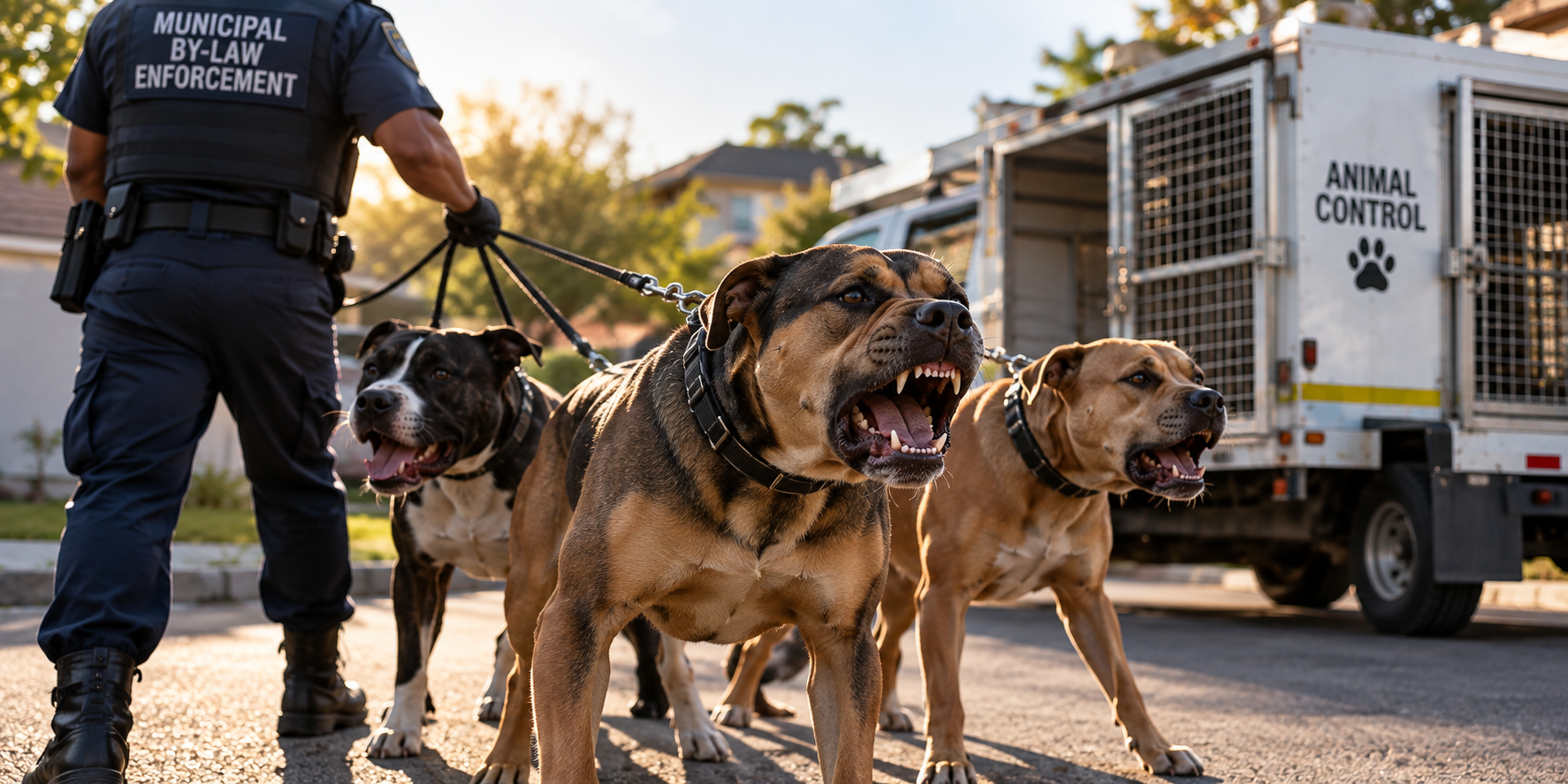
The case concerned three dogs named Pirelli, Bud Light and Knight. Two were Pit Bull Terriers and the third was a mixed-breed dog. They were kept at residential premises in Caledon.
Three separate incidents involving the dogs occurred between November 2023 and March 2024. The dogs attacked and seriously injured three individuals who had attended the property.
The injuries were sufficiently severe to require hospitalisation. The incidents eventually resulted in intervention by Theewaterskloof Municipality.
Three Dogs
The proceedings concerned Pirelli, Bud Light and Knight, two Pit Bull Terriers and a mixed-breed dog.
Three Serious Attacks
Three people were attacked in separate incidents and suffered injuries requiring hospitalisation.
Private Property
A central issue was that the attacks occurred within the boundaries of private property rather than while the dogs were roaming in a public place.
Municipal Intervention
Municipal officials issued a compliance notice and sought control, removal and evaluation of the dogs.
The Municipality Steps In
After becoming aware of the attacks, a senior municipal inspector served a compliance notice on the owner on 8 March 2024.
The notice required steps to be taken to restrain or control the dogs so that further incidents could be prevented and public safety protected.
The Municipality also intended to remove the dogs to the municipal pound for evaluation.
The Municipality regarded the dogs as having become a public nuisance and a danger to the general public after the series of serious attacks.
What Did the Owner Do?
The owner disputed the Municipality's authority to detain the dogs under the Impoundment By-Law.
One of the central arguments was that the attacks had occurred on private property and not while the dogs were straying unattended on a street, road, road reserve or other public place.
The dogs were moved to a private boarding kennel rather than delivered to the Municipality. When a municipal official later attended at the kennel, the dogs were not released to him.
The owner also maintained that additional security measures had been installed at the property, including improved fencing, secure areas for the dogs and warning signage.
Why Did the Matter End Up in Court?
The Municipality approached the court seeking orders that would require the dogs to be delivered to the municipal pound for evaluation.
The proposed evaluation was intended to assess the health, behaviour and temperament of the animals and determine the risk they posed to public safety.
The court of first instance dismissed the Municipality's urgent application. After leave to appeal was ultimately granted by the Supreme Court of Appeal, the matter came before the Western Cape High Court as a full-court appeal.
The dispute was not merely about whether dogs could be impounded after being found loose in a street. It concerned the Municipality's power to address dangerous animals creating a public nuisance even where the incidents occurred on private property.
The Municipal By-Laws
Two municipal by-laws were particularly important to the dispute: the Public Nuisances and Nuisances Resulting from the Keeping of Animals By-Law and the Impoundment of Animals By-Law.
The High Court considered the provisions together rather than treating the impoundment provisions in isolation.
Public Safety
The by-law regulates conduct and conditions that may threaten safety, health, welfare, peace or harmony within the Municipality.
Duty to Exercise Control
Owners or persons in charge of animals are required to exercise control over animals in their custody.
Power to Require Steps
The Municipality may prescribe measures to address, resolve, mitigate or prevent a nuisance.
Enforcement Mechanism
Where the requirements of the by-laws are met, impoundment may form part of the Municipality's response to a dangerous animal or public nuisance.
Can a Dog on Private Property Be a Public Nuisance?
This was one of the most significant aspects of the judgment.
The relevant by-law defined a public nuisance broadly enough to include an action, omission or condition at premises that could place the safety of persons or property in jeopardy.
It also specifically addressed circumstances in which a person allows an animal or dog to create a nuisance on public or private land or to become a danger to other animals, neighbouring property owners or the general public.
The High Court rejected the proposition that municipal enforcement was necessarily unavailable merely because the dogs' attacks had occurred on private property.
The Responsibilities of Dog Owners
Municipal by-laws may impose specific duties on owners and persons responsible for animals.
In this matter, the applicable by-law required an owner or person in charge of an animal to exercise control over the animal and contained provisions directed specifically at dogs that create a danger or nuisance.
Keep the Animal Under Control
Owners may be required to take reasonable and effective measures to prevent their animals from endangering others.
Secure the Premises
Applicable by-laws may contain requirements relating to fencing, containment and preventing dogs from creating a danger.
Dangerous-Dog Signage
The applicable municipal rules may require appropriate warnings where a vicious or dangerous dog is kept.
Comply With Lawful Instructions
Ignoring a valid municipal compliance notice or lawful instruction can result in further enforcement proceedings.
What Happens If You Ignore Municipal Directions?
The judgment demonstrates why a municipal compliance notice should not simply be ignored.
Where an authorised municipal officer acts under a valid by-law, continued refusal to comply can lead to escalating enforcement measures and ultimately court proceedings.
A Compliance Notice May Be Issued
The municipality may direct the owner to terminate or remedy conduct that constitutes a nuisance.
Specific Measures May Be Required
Depending on the applicable by-law and circumstances, measures may be required to control, restrain or otherwise address the risk posed by the animal.
The Animal May Be Impounded
Where the legal requirements are satisfied, municipal impoundment procedures may be used to remove the animal to a place of safekeeping.
Court Proceedings May Follow
If an owner refuses to comply, the municipality may seek appropriate court orders to enforce its by-laws.
Costs May Follow
Litigation can also result in an adverse costs order against the owner, as occurred in this matter.
Why Was an Evaluation of the Dogs Important?
The Municipality sought to have the dogs professionally evaluated to determine the level of danger they posed.
The proposed assessment included matters such as the dogs' behaviour, temperament, aggression history, health, prospects for rehabilitation and the risk posed to public safety.
The High Court regarded evaluation as a legitimate step in addressing the nuisance and determining the appropriate way forward.
An assessment of a dangerous animal may influence decisions concerning continued impoundment, rehabilitation, return to the owner or other lawful measures. Dog owners should therefore obtain legal advice promptly where a municipality seeks compulsory surrender or evaluation of an animal.
Why Did the High Court Uphold the Appeal?
The High Court concluded that the lower court had taken too narrow an approach to the Municipality's powers.
The Municipality's authority was not confined to dealing with stray dogs found unattended on public roads or in public places. The nuisance by-law provided a legal framework for dealing with dogs that created a public nuisance or danger.
Once the preliminary steps required by the nuisance by-law had been followed, the procedures under the Impoundment By-Law could be used where impoundment became necessary.
The Court interpreted the municipal framework as a whole. The Nuisance By-Law could trigger municipal action against a dangerous dog, while the Impoundment By-Law provided procedures for carrying out the impoundment.
Who Is the “General Public”?
Another important issue was whether people entering private premises could fall within the protection afforded to the “general public”.
The Court approached the expression in light of the purpose of the by-law and the Municipality's constitutional responsibility to promote a safe and healthy environment.
People who lawfully attend private premises, whether by invitation, to provide a service or to perform official duties, do not lose the protection of municipal safety rules merely because they have stepped onto private property.
Keeping a dog behind a boundary wall does not necessarily resolve the legal issue if people who lawfully enter the premises are exposed to a serious and inadequately controlled danger.
What Did the Court Order?
The High Court upheld the Municipality's appeal and set aside the order of the court of first instance.
The Appeal Was Upheld
The Municipality succeeded in overturning the earlier dismissal of its application.
The Dogs Had to Be Delivered
The first respondent was directed to deliver Pirelli, Bud Light and Knight to the municipal pound by the date specified in the court order.
Municipal Instructions Had to Be Followed
The owner was ordered to comply with the instructions of the Municipality's authorised officer as provided for in the order.
Failure Could Lead to Impoundment
If the owner failed to comply, the Municipality was authorised to impound and process the dogs in accordance with the applicable law.
Costs Were Awarded
The first respondent was ordered to pay the relevant costs on scale A.
What Does This Mean for Victims of Dog Attacks?
Municipal enforcement and a civil damages claim are separate legal processes.
A person who has suffered injury in a dog attack may potentially have a civil claim for damages depending on the circumstances, while the municipality may separately exercise powers under its own by-laws to address the danger posed by the animal.
Municipal records can also become relevant evidence. Previous complaints, compliance notices, earlier attacks and communications concerning the animal may be important when investigating the circumstances surrounding a later incident.
Record the Injuries
Medical records, photographs and treatment documentation may become important evidence in a damages claim.
Record What Happened
Preserve information regarding where and how the attack occurred and the circumstances immediately before it.
Previous Incidents May Matter
Evidence of earlier attacks or complaints can be relevant to the broader factual and legal enquiry.
Report Dangerous Animals
Reporting a dangerous animal may allow the relevant municipality to consider enforcement under its applicable by-laws.
Does a Municipal Finding Automatically Make the Owner Civilly Liable?
No. Municipal enforcement and civil liability should not be confused.
A municipality may determine that an animal constitutes a nuisance or danger for purposes of its by-laws and take regulatory action. Whether an injured person is entitled to damages is a separate legal question that depends on the cause of action and the facts of the particular attack.
Municipal law: What may the municipality do
to control or remove a dangerous animal?
Personal injury law: Does the injured person
have a civil claim for compensation against the owner or
another responsible party?
What Should Dog Owners Do After Receiving a Municipal Notice?
A person who receives a compliance notice or instruction from a municipality should take it seriously, but that does not mean that every municipal demand is necessarily beyond legal challenge.
The sensible approach is to establish the legal basis for the notice and respond within the required timeframe.
Read the Notice Carefully
Identify the by-law relied upon, the alleged contravention and the steps the municipality requires.
Do Not Ignore the Deadline
Failure to respond can lead to further enforcement, impoundment proceedings or litigation.
Preserve Your Evidence
Keep the notice, correspondence, photographs of the property, veterinary information and any evidence concerning the alleged incident.
Obtain Legal Advice Promptly
If you dispute the Municipality's powers or the facts underlying the notice, obtain advice before simply refusing to comply.
Do the Same Rules Apply Everywhere in South Africa?
Not necessarily.
This judgment concerned the specific by-laws applicable within Theewaterskloof Municipality. Municipalities throughout South Africa may have their own by-laws regulating dogs, public nuisances, animal control, licensing and impoundment.
The wording of the applicable local by-law therefore matters when deciding what powers municipal officers have and what obligations are imposed on an animal owner.
Do not assume that the exact Theewaterskloof procedure applies in every municipality. The relevant local by-laws and the facts of the particular case must be examined.
The Key Takeaway
Theewaterskloof Municipality v Marais and Others demonstrates that municipal powers relating to dangerous dogs can extend beyond animals found roaming in public places.
Where an applicable by-law treats a dangerous animal on private premises as a public nuisance, the municipality may be entitled to require remedial steps and, where the legal requirements are met, use impoundment procedures to address the danger.
A lawful direction from a municipal officer should not simply be disregarded. If you believe the Municipality is acting outside its powers, challenge the decision through the proper legal process rather than ignoring the notice.
For people injured in dog attacks, the judgment also demonstrates the role municipal by-law enforcement can play alongside the separate question of whether a civil claim for damages exists.
Dog Attack or Municipal Enforcement Dispute?
Danel Campbell Attorneys assists clients with personal injury claims arising from animal attacks as well as civil and administrative disputes where municipal decisions affect their rights.
Explore Personal Injury Services →This article provides general legal information and commentary on Theewaterskloof Municipality v Marais and Others (Appeal) (A223/24) [2025] ZAWCHC 355 and does not constitute legal advice. Municipal by-laws differ between municipalities, and the powers available to municipal officials depend on the wording of the applicable by-law and the facts of the particular matter. Personal injury claims and disputes concerning animal control are fact-specific and legal advice should be obtained regarding a particular matter.