
What Is a Slip and Fall Claim?
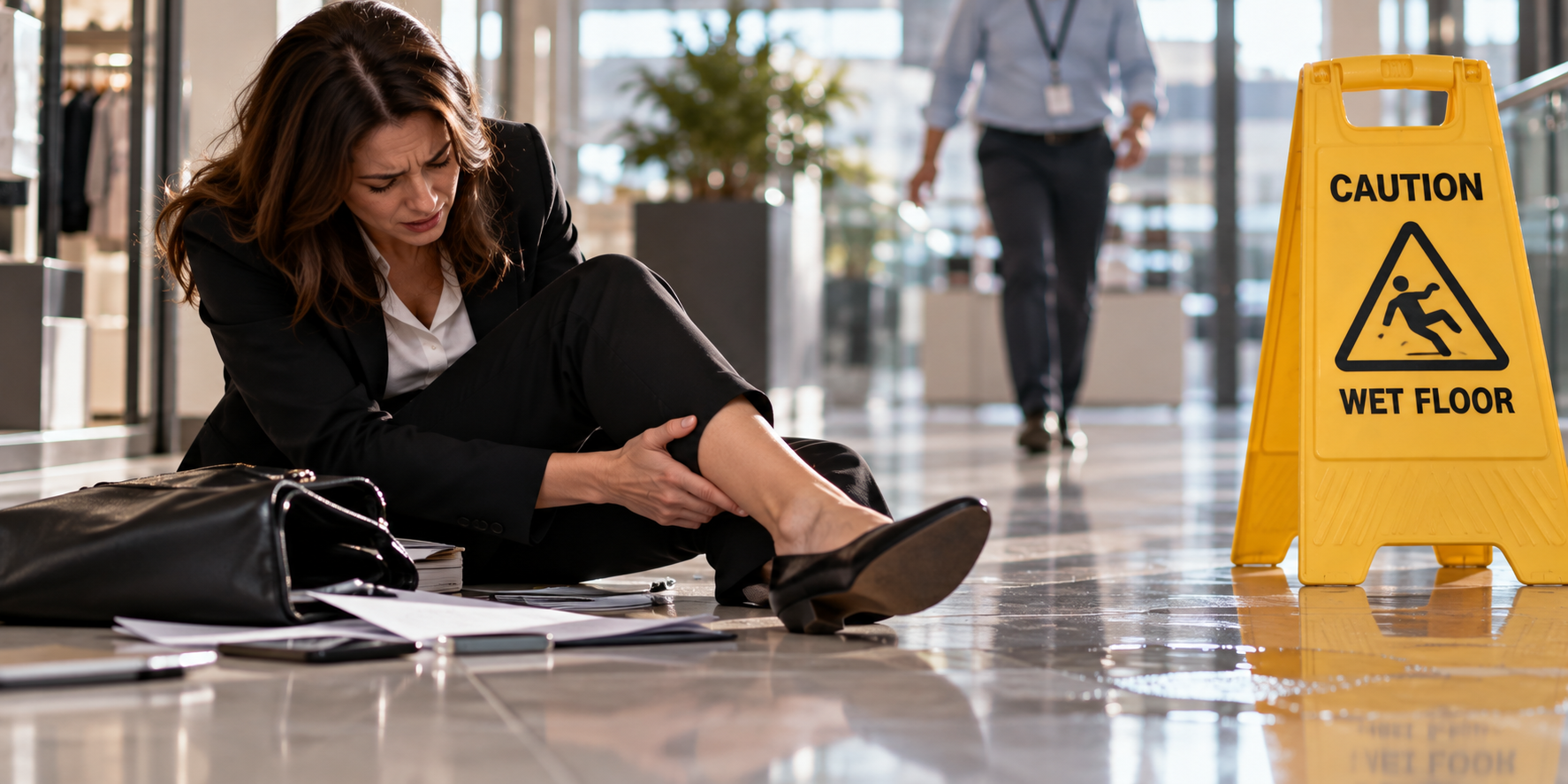
A slip and fall claim is a personal injury claim arising from injuries suffered because of an allegedly unsafe condition on property.
These claims may arise in shopping centres, supermarkets, restaurants, office buildings, residential complexes, public spaces and many other locations.
The mere existence of a hazard is not always enough to establish liability. The circumstances surrounding the hazard and the conduct of the person or entity responsible for the premises must be considered.
Common Causes of Slip and Fall Accidents
Premises liability claims can arise from many different unsafe conditions. Common examples include:
Wet or Slippery Floors
Water, cleaning products, food, oil or other substances on a walking surface may create a dangerous slipping hazard.
Uneven or Damaged Surfaces
Broken tiles, loose carpeting, unexpected changes in floor level or damaged walking surfaces may cause a person to trip or fall.
Poor Lighting
Inadequate lighting in stairways, corridors, parking areas or other walking spaces may make hazards difficult to identify.
Unaddressed Hazards
A hazard that is not removed, repaired or appropriately identified within a reasonable period may create a risk of injury.
What About Warning Signs?
Warning signs can be relevant when determining whether reasonable precautions were taken, but their presence does not necessarily determine the outcome of every case.
The location, visibility and adequacy of the warning, the nature of the hazard and the circumstances in which the accident occurred may all be relevant.
Whether a warning was sufficient is assessed in context. A court may consider what the danger was, what steps were taken to address it, whether the warning was visible and whether those measures were reasonable in the circumstances.
Who May Be Responsible?
Identifying the correct defendant can be an important part of a slip and fall claim. Responsibility may depend on who owned, occupied, controlled or maintained the area where the accident occurred.
Property Owners
A property owner may potentially be liable where a dangerous condition falls within its responsibility and reasonable precautions were not taken.
Businesses or Occupiers
A tenant, retailer, restaurant or other business may potentially bear responsibility for hazards in areas under its control.
Property or Centre Management
Depending on contractual and operational arrangements, responsibility for common areas or maintenance may rest with a management entity.
Municipalities or Other Organs of State
Accidents involving certain public property may give rise to claims against a municipality or another organ of state, subject to the applicable legal requirements.
What Must Be Proven?
Slip and fall claims are not automatic compensation claims. Liability generally depends on establishing the legal elements necessary for a delictual claim.
A Dangerous Condition Existed
Evidence must establish the condition or hazard alleged to have caused the accident.
The Defendant Had a Relevant Legal Duty
The relationship between the defendant and the premises must be considered to establish whether responsibility for the hazard rested with that party.
Reasonable Steps Were Not Taken
The conduct of the responsible party is assessed against what could reasonably have been expected in the circumstances.
The Hazard Caused the Fall and Injury
There must be a sufficient causal connection between the unsafe condition, the accident and the injuries for which compensation is sought.
A successful claim generally requires evidence showing why the condition was dangerous, why reasonable precautions should have been taken and how the failure to take those precautions resulted in the claimant's injuries.
What Should You Do After a Slip and Fall?
What happens immediately after the accident can become important later. Hazards can be cleaned, repaired or removed quickly, and surveillance footage may not be retained indefinitely.
Seek Medical Attention
Your health should come first. Medical records also provide important evidence of the injuries sustained and the treatment required.
Photograph the Scene
If possible, photograph the exact hazard, surrounding area, floor surface, lighting, warning signs and any other relevant conditions.
Report the Accident
Report the incident to the store, property manager, security personnel or other responsible person and obtain details of any incident report.
Identify Witnesses
Obtain the names and contact details of anyone who witnessed the fall or observed the dangerous condition.
Preserve Relevant Evidence
Keep medical accounts, photographs, correspondence, proof of income loss and any other documents relating to the accident and its consequences.
What About CCTV Footage?
Where a fall occurs in a shopping centre, supermarket, office building or other monitored premises, CCTV footage may provide important evidence of how the accident occurred.
Depending on what was captured, footage may also provide information about how long a hazard existed, whether staff were aware of it and what precautions were taken before the accident.
CCTV systems do not necessarily retain footage indefinitely. If video footage may exist, legal advice should be obtained promptly so that appropriate steps can be considered to preserve potentially relevant evidence.
What If You Were Partly at Fault?
A defendant may argue that the injured person failed to take reasonable care for their own safety or contributed to the accident.
This does not necessarily mean that the entire claim fails. Where both parties were negligent, an assessment may be required of their respective contributions to the harm.
Factors such as whether the hazard was obvious, whether the claimant could reasonably have avoided it and the precautions taken by the defendant may all become relevant when negligence is assessed.
What Compensation Can Be Claimed?
The damages that may be recoverable depend on the nature and severity of the injuries and the financial consequences of the accident.
Medical Expenses
Qualifying past treatment expenses and reasonably established future medical costs may form part of the claim.
Loss of Earnings
Where injuries prevent a person from working or affect future earning capacity, the resulting financial loss may be relevant.
Pain & Suffering
Depending on the injuries and their consequences, appropriate general damages may form part of the claim.
Rehabilitation & Future Needs
Serious injuries may result in future rehabilitation, therapy, assistance or other accident-related needs.
How Long Do You Have to Claim?
Personal injury claims are subject to prescription. An ordinary delictual damages claim will generally be subject to a three-year prescription period, although when prescription begins to run and whether it has been delayed or interrupted can depend on the circumstances.
Claims against municipalities and certain other organs of state require additional attention because separate statutory notice requirements may apply.
Where the proposed defendant is an organ of state, written notice of the intention to institute proceedings generally needs to be served within six months from the date on which the debt became due, subject to the applicable legislation and the possibility of condonation in appropriate circumstances.
The practical problem with delaying a slip and fall claim is not only prescription. Witnesses disappear, memories fade, CCTV may be overwritten and the physical hazard itself may be repaired or removed. Early investigation can therefore be extremely important.
The Legal Process
The appropriate process depends on the circumstances of the accident, the identity of the responsible party and whether liability or the amount of damages is disputed.
Assess the Claim
The accident, location, hazard, injuries and available evidence are considered to determine whether there is a potentially viable claim.
Identify the Responsible Party
Ownership, occupation, management and maintenance arrangements may need to be investigated to identify the correct defendant.
Gather Supporting Evidence
Medical records, photographs, witness statements, incident reports and other relevant evidence are gathered and assessed.
Engage the Responsible Party
The claim may involve correspondence and engagement with the responsible party, its attorneys or an insurer where applicable.
Litigation Where Necessary
If liability or the amount of compensation cannot be resolved, court proceedings may be required.
Why Legal Guidance Matters
Slip and fall matters can appear straightforward immediately after an accident, but disputes often arise over what caused the fall, how long the hazard existed, who was responsible for the area and whether reasonable precautions had been taken.
Assess Negligence
The available evidence must be considered against the legal requirements for negligence and liability.
Preserve the Case
Early steps may assist in preserving photographs, footage, witness information and other important evidence.
Assess the Loss
The claim should consider the full consequences of the injury, including appropriate future losses where supported by evidence.
Protect the Claim
Prescription and any additional statutory requirements should be identified before they place the claim at risk.
The Bottom Line
If you were injured after slipping or falling because of an unsafe condition on someone else's property, you may have a claim for compensation.
Whether the property owner, occupier, business, municipality or another party is legally responsible will depend on the facts, the nature of the hazard, the precautions taken and the evidence available.
If you believe negligence caused your fall, obtain medical treatment and preserve as much evidence as possible. Photographs, witnesses, incident reports and CCTV footage can become important when establishing exactly what happened.
Slip & Fall and Premises Liability Claims
Danel Campbell Attorneys assists clients with personal injury claims arising from unsafe premises, including slip and fall accidents in shops, shopping centres, workplaces and other public or private spaces.
Explore Personal Injury Services →This article provides general information regarding slip and fall and premises liability claims in South Africa and does not constitute legal advice. Liability, prescription, statutory notice requirements and the damages recoverable depend on the particular facts and circumstances of each matter.