
A Tragic Incident in Uitenhage
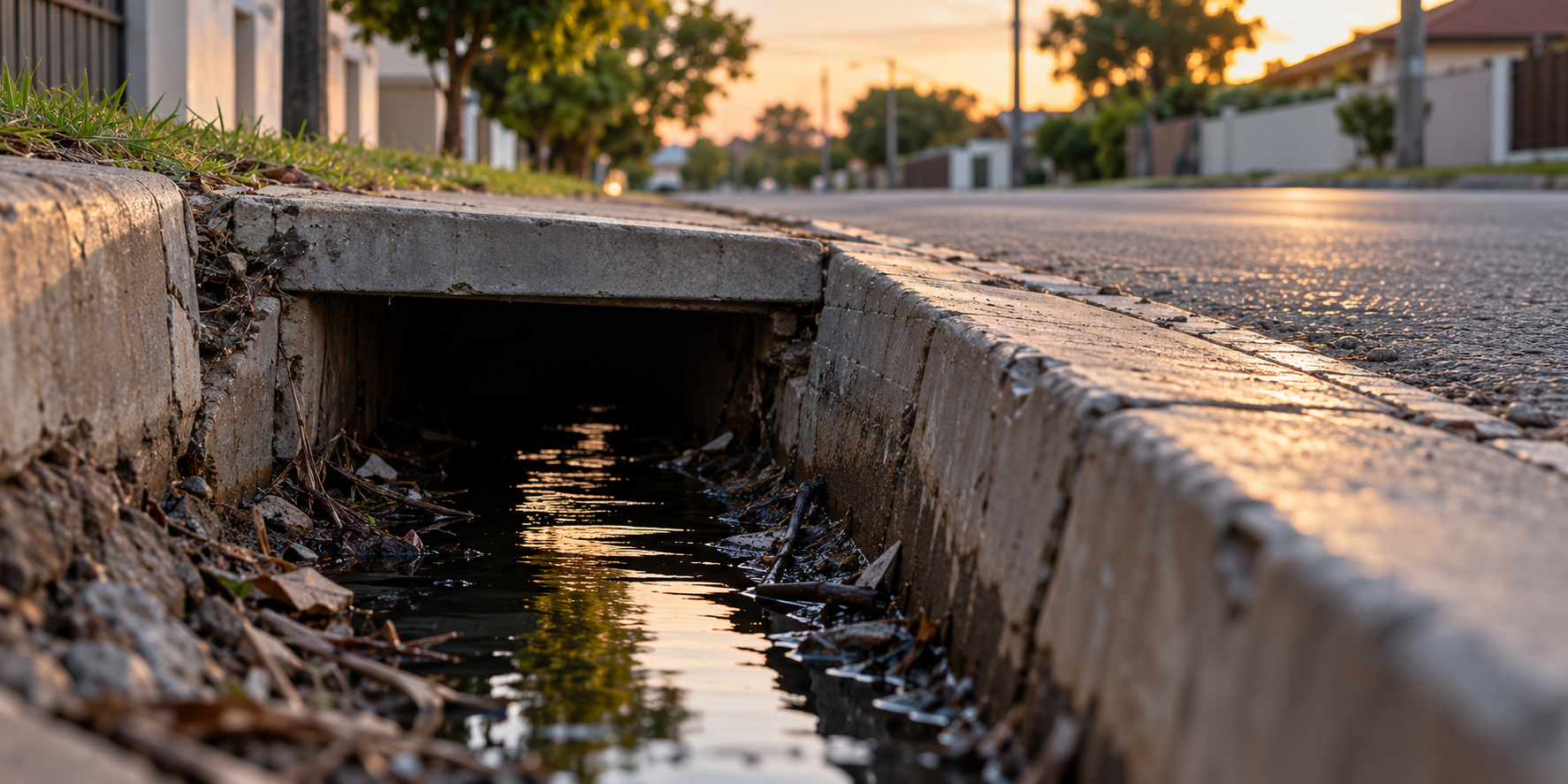
On 13 September 2014, a 17-month-old child tragically drowned after falling into an uncovered stormwater drain in Grootboom Street, Greenfields, Uitenhage.
The child's parents subsequently instituted separate claims for damages against the Nelson Mandela Bay Municipality. The claims were later consolidated.
Due to the psychiatric consequences suffered by the parents following the death of their daughter, Johannes Diederik Le Roux acted as curator ad litem on their behalf in the litigation.
Their claims concerned the severe emotional and psychological trauma caused by their child's death and were based on the municipality's alleged failure to maintain and secure the stormwater drain.
13 September 2014
The 17-month-old child fell into an uncovered stormwater drain in Grootboom Street and drowned.
Nelson Mandela Bay Municipality
The municipality was responsible for the relevant public infrastructure within its municipal area.
Delictual Damages
The parents claimed damages arising from the emotional and psychological consequences of their daughter's death.
Failure to Secure the Drain
The Court had to determine whether the municipality's omission rendered it delictually liable for the harm suffered.
Had the Municipality Been Warned About the Drain?
This became an important factual issue in the case.
Evidence was presented that the stormwater drain had been left uncovered for years before the incident and that residents had repeatedly complained about the danger.
The child's mother testified that the drain had been open since approximately 2012 or 2013. She said she had contacted the municipal call centre three or four times because she was concerned about children in the area.
A nearby pastor testified that he had lodged numerous complaints with the municipality and had also raised the issue with the ward councillor. Another resident confirmed that she had reported the uncovered drain on more than one occasion.
A further witness who lived in Grootboom Street testified that the drain had remained uncovered for years. He had seen children playing near it and would chase them away because of the danger it posed.
The evidence did not concern a hazard that had appeared moments before the accident. The case concerned an open drain that witnesses said had existed for years and had repeatedly been reported as a danger to residents and children.
What Evidence Did the Municipality Present?
The municipality called one witness, its Acting Senior Superintendent for Roads and Waterworks.
She confirmed that the drain was open when she inspected the area on the day of the drowning. She also observed four open drains in the nearby vicinity and water pooled in the drain in which the child had drowned.
The municipality disputed that it had previously received complaints concerning the Grootboom Street drain and relied on call centre records covering the period from January to September 2014.
There was, however, a significant problem with this evidence: the records related to Mielies Street, not Grootboom Street, where the drowning had occurred.
During cross-examination, the municipal witness ultimately conceded that the drowning had occurred in Grootboom Street and not Mielies Street. The records relied upon by the municipality therefore did not properly answer the evidence concerning complaints about the actual drain.
How Did the Case Reach the Supreme Court of Appeal?
The matter travelled through three stages of litigation, with different conclusions being reached along the way.
The Trial Court
The trial court accepted the evidence of the parents and their witnesses and found that the municipality's employees had acted wrongfully and negligently by failing to ensure that the drain was secured.
The Full Court
On appeal, the full court overturned the finding of liability. It concluded that the parents had failed to establish the necessary requirements of wrongfulness and causation.
The Supreme Court of Appeal
The SCA found that the full court had misdirected itself in its treatment of the evidence and restored the trial court's finding of liability.
What Must Be Proved in a Delictual Claim?
A claim for damages based on delict requires more than simply proving that harm occurred.
In this case, the claim was based on an omission: the allegation was that the municipality failed to take reasonable steps to address a dangerous stormwater drain.
The parents therefore had to establish the legal requirements necessary to hold the municipality liable for that omission.
Wrongfulness
Whether the law recognises a legal duty in the circumstances and considers it reasonable to impose liability for the omission.
Negligence
Whether reasonable steps should have been taken to prevent the foreseeable harm and whether the failure to do so was negligent.
Factual Causation
Whether the wrongful conduct or omission probably caused the harm that occurred.
Legal Causation
Whether the connection between the conduct and the harm is sufficiently close for legal liability to follow.
Why Was the Municipality's Failure to Act Wrongful?
The SCA emphasised that wrongfulness in an omission case concerns whether it is reasonable, as a matter of law and public policy, to impose liability for the failure to act.
The municipality's statutory and common-law responsibilities regarding public infrastructure were central to this enquiry.
The parents had also relied on sections 152 and 156 of the Constitution and the municipality's relevant by-laws in support of their case.
On the facts accepted by the Court, the municipality had knowledge of the danger posed by the open drain and failed to take appropriate action over an extended period.
The SCA held that the municipality's statutory and common-law duty to maintain public infrastructure was uncontroversial. On the facts of the case, its failure to ensure that the drain was properly covered and to prevent foreseeable harm was wrongful.
Municipalities Are Not Immune From Delictual Liability
The SCA also addressed the historical concept of municipal immunity.
It confirmed that the doctrine no longer forms part of South African law. Municipal liability is determined according to ordinary delictual principles.
This does not mean that a municipality is automatically liable whenever someone is injured by public infrastructure. A claimant must still establish the required elements of delict on the particular facts of the case.
Why Did the SCA Reject the Full Court's Approach?
A significant part of the judgment concerned the manner in which the full court had dealt with the evidence.
The trial court had heard the witnesses directly and had found the parents and their witnesses credible. Their evidence corroborated one another on the fact that the Grootboom Street drain had remained uncovered for an extended period and that complaints had been made.
Neither the trial court nor the full court made adverse credibility findings against those witnesses.
Despite this, the full court effectively rejected their evidence and preferred the municipality's documentary records, even though those records related to a different street.
An appeal court does not lightly interfere with the factual and credibility findings of a trial court that had the benefit of seeing and hearing the witnesses. The SCA found that the full court had misdirected itself in its evaluation of the evidence.
What Did the Evidence Establish About Municipal Knowledge?
The SCA considered the conflicting versions concerning whether complaints had been made to the municipality.
Given the trial court's credibility findings and the absence of a proper basis for rejecting the witnesses' evidence, the SCA concluded that the reports concerning the open drain had been made.
The municipality therefore had knowledge of the danger posed by the uncovered drain.
The Court further observed that a municipality cannot rely solely on members of the public to identify hazardous infrastructure.
Municipal employees working in an area on matters involving water, electricity, sanitation and related services may themselves encounter hazardous infrastructure. The SCA considered them obliged to report dangerous open drains so that they can be attended to.
Was the Municipality's Failure the Cause of the Death?
Establishing a duty and negligence is not enough. A claimant must also prove causation.
The SCA explained that causation involves both factual and legal enquiries.
On the evidence, the open stormwater drain was the direct physical cause of the child's drowning. The Court found a direct nexus between the municipality's failure to cover the drain timeously and the death that followed.
The SCA concluded that the most reasonable inference was that the child's death could have been prevented had the municipality acted timeously and attended to the open drain.
What About the Municipality's Contributory Negligence Defence?
The municipality also attempted to place responsibility on the child's mother.
It argued that, given the child's young age, she should have been under the supervision of an adult and should not have been left in the care of a 15-year-old.
The SCA rejected this argument.
The evidence showed that the mother had previously left the child in the teenager's care without incident and that the child was left there only for a short period.
The Court recognised that in many lower-income households an older child may be entrusted with caring for younger children. On the evidence in this case, the municipality failed to establish contributory negligence on the mother's part.
Why This Judgment Matters for Municipal Liability
The judgment is significant for claims involving injuries caused by dangerous or poorly maintained public infrastructure.
It confirms that municipalities may face delictual liability where a legal duty exists, a foreseeable danger is not addressed, and the municipality's wrongful and negligent omission causes harm.
It also demonstrates the importance of evidence showing how long a dangerous condition existed, whether complaints were made, whether municipal employees knew or should have known of the hazard, and what reasonable measures could have prevented the injury.
Maintenance Matters
Municipalities have statutory and common-law responsibilities relating to public infrastructure within their areas.
Evidence Can Be Crucial
Previous reports of a hazard may help establish municipal knowledge and the foreseeability of harm.
Foreseeability Matters
The nature of the hazard, its location and the risk it creates are relevant when assessing negligence.
The Link Must Be Proved
A claimant must establish the necessary causal connection between the municipal omission and the harm suffered.
Is a Municipality Liable for Every Accident on Public Property?
No.
The judgment should not be interpreted as imposing automatic liability on municipalities whenever a person is injured on a road, pavement, stormwater system or other public property.
Municipal liability remains dependent on the facts and the ordinary requirements of delict.
Was There a Dangerous Condition?
The nature and seriousness of the alleged hazard must first be established.
Did a Legal Duty Exist?
The circumstances must justify imposing liability for the municipality's failure to act.
Was the Municipality Negligent?
The claimant must establish that reasonable preventative measures should have been taken in the circumstances.
Did the Failure Cause the Harm?
Both factual and legal causation must be established.
Can the Loss Be Proved?
Liability and the amount of damages are separate issues. The claimant must still establish and quantify the damages being claimed.
Injured Because of Dangerous Municipal Infrastructure?
Evidence can become critical very quickly in claims involving potholes, uncovered drains, defective pavements, unsafe public facilities or other allegedly dangerous municipal infrastructure.
The circumstances of every claim differ, but preserving evidence as soon as possible may assist in establishing the condition of the area, prior knowledge of the danger and the circumstances in which the injury occurred.
Photograph the Hazard
Where it is safe to do so, photographs or video can preserve evidence of the condition before repairs or changes are made.
Record the Exact Location
Note the street, nearby landmarks and precise location of the incident. The distinction between Grootboom Street and Mielies Street became important in this very case.
Identify Witnesses
Obtain the details of people who witnessed the incident or who have knowledge of how long the dangerous condition existed.
Preserve Complaint Records
Reference numbers, emails, photographs, municipal complaints and correspondence concerning the hazard may become relevant.
Obtain Legal Advice Promptly
Claims against organs of state may involve statutory notice requirements and prescription periods. Delay can affect the ability to pursue a claim.
What Did the Supreme Court of Appeal Ultimately Order?
The Supreme Court of Appeal concluded that the full court had erred in finding that the requirements of wrongfulness, negligence and causation had not been established.
The full court's order was therefore set aside, with the result that the trial court's finding of liability against the municipality stood.
The SCA upheld the appeal with costs, including the costs of two counsel where employed. The full court's order was set aside and replaced with an order dismissing the municipality's appeal with costs.
The Key Takeaway
Le Roux NO v Nelson Mandela Bay Municipality is a powerful reminder that a municipality's failure to address dangerous public infrastructure can have serious legal consequences where the requirements for delictual liability are established.
The case involved an open stormwater drain that had allegedly remained dangerous for years, repeated complaints from residents, evidence that children played nearby and a hazard that could have been remedied before tragedy occurred.
On those facts, the SCA found that the municipality's omission was wrongful and negligent and that the necessary causal connection to the child's death had been established.
A dangerous condition alone does not automatically establish a claim. Wrongfulness, negligence, causation and damages must be considered on the evidence in each case. Claims against municipalities may also be subject to specific procedural and statutory requirements.
Injured Because of Unsafe Public Infrastructure?
Danel Campbell Attorneys assists clients with personal injury and delictual claims, including matters involving allegedly unsafe premises and public infrastructure. If you have suffered harm and believe that a municipality or another responsible party failed to address a dangerous condition, obtaining advice early can help determine whether a viable claim exists.
Explore Personal Injury Services →This article provides general legal information and commentary on Johannes Diederik Le Roux NO and Another v Nelson Mandela Bay Municipality (239/2024) [2025] ZASCA 122 and does not constitute legal advice. Municipal and personal injury claims are fact-specific and may be subject to statutory notice requirements, prescription periods and other procedural requirements. Liability depends on the evidence and circumstances of each matter. Legal advice should be obtained in relation to a specific claim.